Three Rules For Clearing Your Mind As An Entrepreneur

paddle board

Shutterstock

By Andy Bailey

The idea of clearing one’s mind isn’t exactly a breakthrough. After all, there are numerous articles and studies on how meditative acts help boost creativity and performance. According to Walter Isaacson’s The Book of Jobs, Steve Jobs even asserted that the driving factor behind his creative inspiration was a clear mind through meditation.

As a young business owner back in the early days, I discovered the powerful effect that clearing my mind could have on my decision-making and creativity. By no coincidence, it was also around that time that paddleboarding became my hobby.

See, I was spending a lot of time with my family at our home on the Gulf Coast of Florida. In an effort to take greater advantage of our surroundings and find some time to myself, I bought a paddleboard and took it out for a maiden voyage. I’ve been addicted ever since.

The activity is not only beneficial because of its positive effects on your core strength and balance, but also because it allows you to experience soothing surroundings devoid of distracting noises or movement. When I’m balancing on top of the water, listening to the laps of the waves and feeling the board beneath my feet, I truly clear my head – and I’m not talking about a zone-out-in-front-of-the-TV mindless stare, but a complete lack of active thought, a deep reserve of mental energy expenditure.

The Benefit Of A Clear Mind

In 2011, I sold my business, which I started in college and grew into a successful organization. Any entrepreneur will tell you ahead of the process that selling your company will be an exciting time, but also a terrifying one.

Once the sale wrapped and I was ready for whatever my next phase of life would be, I recognized – and was invigorated by – the fear of the unknown. I made a commitment to avoid that “next phase” decision for one full year. During that year-long recess, I paddleboarded – a lot. I made a conscious effort to keep my mind clear and open, and each time on the board, I left worry and anxiety behind.

I realized then just how crucial my head-clearing trips had been to my overall approach to my career up to that point. It was during this paddleboarding sabbatical that I came up with the idea for my next company, where I now get to share my successes and mistakes with other entrepreneurs all over the country looking to improve their businesses and themselves.

Had I been actively engaged in another project or overwhelmed with deciding my next step, I may not have had my breakthrough. And then it hit me: These types of mindfulness activities should be a habit for all entrepreneurs.

As entrepreneurs, we’re always working, and we grow accustomed to thinking about our business every waking second. But people need a respite from constant mental processing in order to put groundbreaking ideas into action and achieve measurable results.

If you feel like you’re getting burnt out regularly or lacking the inspiration or creativity you once possessed, get out of your surroundings and clear your mind. Below are my three rules on how to do it:

1. Find your “paddleboard.”

Okay, so paddleboarding may not be for everyone. No matter, the trick to really getting away and clearing your head is to find your version of my paddleboarding affinity. Maybe it’s setting times on early mornings to visit the driving range at a nearby golf course, or maybe it’s setting aside time each month to build a woodworking project with your bare hands. The key here is to find something that’s more muscle memory than creative thought.

2. Make it a fun habit.

This one should be obvious, but to effectively free your mind from the daily distractions and stress of entrepreneurship, you’ve got to make your physical activity something you really enjoy. For example, don’t jump straight into meditating if you realize that you’re not a big fan.

Find your “zen zone” where you can actually enjoy not thinking. This is important because, for many of us entrepreneurs, it’s difficult to stop thinking. Don’t set yourself up for failure by doing something forced. Take advantage of your physical hobbies and interests and find something that encourages you to escape.

3. Do it alone.

Much of what makes us entrepreneurs is the way we process outside stimuli and information. We take our surroundings and filter them through our perspective, warping them and shaping them into how they can fit in our business. All of this external noise is detrimental to the process of clearing your mind, so commit to spending some quiet time by yourself so you can get back in tune with what you really want and where you’re headed, without input from others.

You don’t have to escape to the middle of the Gulf of Mexico to practice mindfulness, but as an entrepreneur, you should make an effort to reduce the number of distractions around you. Find your paddleboard and set aside time to clear your head of the daily stress and rigor of entrepreneurship. You’ll notice a difference if you make the commitment.

This Former Marketing Director Quit Her Job After 7 Weeks of Posting Amazing Animations on Instagram

Rachel-Ryle-Studio-2015

Rachel Ryle’s optimistic attitude comes through in her videos, which often revolve around themes of thankfulness, love, celebration and exploration.

By Lydia Belanger

Rachel Ryle was working a day job as a marketing director for a toy company four years ago when she decided to bring her hobby of illustration to life.

She’d always loved to draw, though she’d never considered herself an artist. But when Instagram added video compatibility in summer 2013, she began wondering how she might apply her creative talents to the medium. She busted out her colored pencils and turned illustrations of a watering can and a flower into an animated video.

At the time, Ryle says, she didn’t even know that what she was making was animation, per se. Her friends urged her to pursue the art form further. In the week following her first animated post, she worked on more pieces every night when she got home from work.

“I think oftentimes, artists need affirmation from other people to feel confident,” Ryle tells Entrepreneur. “Instagram actually is what gave that to me.”
Although success wasn’t immediate for her, she quit her day job within seven weeks of posting that first video to the platform, thanks to the encouragement of friends. Today, Ryle has 1.1 million Instagram followers (@rachelryle) and lends her animated illustrations to brands and even movie studios.

“In life, I feel like it’s really important to be opportunistic,” Ryle says. “In that moment, I felt that if I didn’t jump and trust that this was going to be something, I would miss the opportunities that then followed.”

Her optimistic attitude comes through in her videos, which often revolve around themes of thankfulness, love, celebration and exploration. She says she hopes her positive messages and continued creation will inspire her followers and fellow creators to put their own works out into the world.

Entrepreneur spoke with Ryle while she was vacationing in Los Angeles, traveling and collecting inspiration for new animations prior to a move from Boulder, Colo., to New York City. There, she says, she’ll chase her artist dreams and focus on creating even more.

1. How did you get your start with Instagram?

When Instagram added video, I saw that people weren’t being as mindful of the content they were creating with it right off the bat, and I felt like it deserved the same type of creativity and time and dedication that the photographs were taking on Instagram. But I didn’t have the intent of animating when I started.
Seven weeks after I made my first animation, I had received so much attention for what I was creating and affirmation from people excited about what I was doing, that that’s when I decided to quit my day job, call myself an animator and turn it into my full-time career.

As a marketing director for a toy company, I had been building a lot of understanding and skills within social media. And I had learned to market products. But it’s an entirely different animal when you realize that you have something that is worth marketing and you have an artistic talent or something to share. And that’s when I applied all of those skills to myself as the product.

2. What other platforms do you use and what percentage of the time do you spend on them vs. Instagram?

Honestly, Instagram is still my main focus, so I create content for that purpose. Luckily, I feel like a lot of other social platforms have seen the value of how Instagram is doing it. They’ve actually adapted their content streams to cater to it and to fit the square, because that’s where they know people are creating the content. So when I share on Facebook or Twitter or Musical.ly, the square formatting fits nicely.

As for YouTube, I’m excited to re-strategize how to not just repurpose my content on there, but be more strategic about new content that I can create that will be better fitting for that video channel. I’m going to be creating content that is more focused on art tutorials, as well as show a little bit more of who I am and my personality — the artist behind the creations. My Instagram and other channels have been so focused on just the art, so I want to express myself in a new and more personal way.

3. What makes Instagram a better platform than other social media?

I’ve always thought that Instagram is such a beautiful platform that really caters to featuring and supporting people’s creativity. Any Joe Schmo can take a photograph, and because of the tools that Instagram provides, an average photograph can turn into an Ansel Adams or something really beautiful. Instagram was really one of the first apps I experienced that really focused on supporting the creative minds of people.

People go on Instagram to get inspired and to see art and see photography and see the world through other people’s eyes in a beautiful way. And I appreciate that. I want the app to do well, so that’s why I dedicate the majority of my time to the app — so that I can be a community member within the masses of that effort.

4. How much of your time do you devote to Instagram?

On average, one animation that is probably 30 seconds long at most will take me four or five days of concepting and illustrating and filming and editing. There’s one animation of mine in particular, my most viewed animation, it’s about coffee. It’s called, “You Say Gibraltar, I Say Cortado.” That one, because of the detail — I built the set and I took a lot more time, I would say it took more like a week and a half to get it together.

And certainly, this isn’t full time. I think as an artist, you need time to create and break away and reset and give your mind a break from the tedious nature of what you’re doing. So oftentimes, when I say it takes these days to create, it’s that I’m also being mindful of giving myself creative breathing room so that it doesn’t become unenjoyable to create. But I can still enjoy what I’m doing.

I honestly think those are the most valuable periods, because it’s days when I am ideating and getting inspiration from either just walking around or mindlessly being online, but something will spark my interest that will eventually and inevitably turn into my next animation. I turn towards travel a lot for inspiration, because it allows me to see new things and experience new things that spark that imagination.

5. How do you promote your account? What’s your number-one way to gain followers?

I view each animation of mine as a new advertisement of my capabilities as an artist. My hope, every single time that I create a new animation, is that it reaches someone new out in the world. That doesn’t mean that I’m desperately wanting a new follower, but that what I’m taking a week to create will reach someone that I didn’t know was going to reach and hopefully inspire them. That inspiration is the ultimate advertisement of what my account is about.

6. How do you engage with others on the platform?

I wish with all of my heart that I had the capability to do more engaging. I think that it’s really important, especially in the first hour to two after I post my animation. Typically, I’m up until like 3 a.m. filming and editing the night before, I go bed for three hours and then I post at 6 a.m. so that New York commuters can see it at 8 a.m. their time. Even in my tired state, I really want to be there, because it’s fresh and people are really excited about the new animation. It allows me, in the moment, to be there with them. I try my best, but sometimes it’s hard to keep up with it.

One of Instagram’s latest features of being able to like comments — give people a heart back and let them know that I read their comment — has been really helpful. It’s just another way of me saying “thank you” for their time that they’ve taken to comment about my pieces. And outside of my work, I definitely scroll through the people I follow and even people I don’t follow and like their stuff and comment, just because it’s the affirmation that we all need to inspire us to keep creating.

7. How often do you post?

I’m in such a transition with this move. I really hope and intend for New York to be more of a place of creation, getting inspiration and really being more mindful of scheduling out time to create more content. Over the last couple of months, or longer, I’ve been preoccupied with the transition of moving. So if you’re asking if my strategy is something like, “once a week,” ideally I want to be able to post more, but it is just such a time-intensive thing, and my mind needs to be present for it.

8. What’s your content strategy?

Ultimately, I hope that the time I’m taking to create something is going to bring joy and inspire other people to create and to explore their own creativity and take time to make something. Because had I not been inspired myself, I would have missed out on this entire fun ride that I’m on.

9. How has your content strategy evolved as Instagram has added features?

I love the Stories feature. The process of moving — and my life outside of creating the limited art that I have been able to create — has been a grind. Right now, I’m traveling, and I absolutely love the ability to show where I am, what I’m seeing and what I’m getting inspiration from.

I’ve been in L.A. for 24 hours, and my Stories are exploding, because I want to remember these moments. I want to remember the graffiti that I saw on that one wall. We all put so much time and attention and care into the final pieces we post, but I think that Stories are a beautiful way for the community of Instagram to be able to show what they’re seeing in life and experiencing and inspired by in a more personal, candid way.

10. What’s your best storytelling trick?

Just because of what I do, I feel like the specialty that I have is the transitions that visually help tell the story within my animations and allow it to flow. It’s like magic — creating moments of magic. You have a limited amount of time to tell a story in a video on Instagram. I limit mine pretty much to 30 seconds. So in 30 seconds, how much can you pack in here but have there be a flow to it that leaves the watcher expecting, “what’s going to happen next?” There’s this series of events that then end up in the final message of the animation. I create visual page-turns that let people know that the story is evolving.

11. How do you set yourself apart from others on the platform?

Oftentimes, it comes down to the time that I spend on the small details of my artwork. There are a lot of times that I could take the short road and maybe not draw the butter being cut or sliced, but have the butter already be on the toast. But instead of taking shortcuts, I spend extra time getting those small details in there, and people notice it.

12. How do you leverage your Instagram and to what extent do you monetize it?

I look to work with brands that have similar goals as me — to bring joy to their audience or to inspire them. There are a lot of great brands out there doing really cool campaigns — campaigns about kindness, giving thanks, gratitude and loving people. And I think that’s such a beautiful thing. They see my art in line with what their mission is. I have taken those opportunities to work with brands who I feel the art helps tell their story and vice versa.

While I do take a number of opportunities creating animations on Instagram and for Instagram accounts, I’m really happy and excited that my art is starting to live on different platforms and in different ways. I have a whole collection of iOS iMessage stickers. The fact that people are starting to recognize my art and it can live in different places is really exciting for me as an artist, to see it grow in that way.

A good example is KIND. I worked with them and they ran a photo contest. It was a back-to-school campaign, and the five people who won got their photograph illustrated by me. Then, it was printed on a lunch box for their kid’s back-to-school adventure. It was really cool for me to be able to be involved in something that, in the end, we created a really fun, cute little product together that was special to the person who took the original photograph.

I’ve done movie trailer work for different movies, but a lot of that lives on Instagram as well. I did a movie trailer for Kubo and the Two Strings last year. And then, prior to that, I did a movie trailer for Kingsman: The Secret Service.

13. What advice do you have for other Instagram influencers or people who want to build brands?

The number-one thing is to get busy making and creating. Oftentimes, especially with artists, we wait and we wait and we wait for the right opportunity. We don’t think it’s perfect enough or we don’t think it’s ready to share.

If you go back on my channel and see my first animation, it’s complete rubbish, and still, at that point, people were encouraging me. I wanted to push myself to continue to grow.
Ultimately, creativity is like any other muscle. The more you use it, the stronger it will become, and the stronger it gets, the more people notice it. That will help you to find what it is you really want to make in life.

14. What’s a misconception many people have about Instagram?

That it’s just a photo app. The people who are creating, taking photos and capturing their lives and their art on Instagram are actually putting a lot of time and thought and attention and care into what they’re doing. Essentially, you’re getting these windows into souls of people. And so, I don’t know if anyone thinks it’s just another photo app, but I would get a cup of coffee with that person and beg to differ, and I’d explain the importance of engaging with the app and engaging with the people who are creating on it. Because the more we can encourage each other, the more great content is going to be created in this world.


Small Business Operations: 4 Ways Your Company Can Improve Sales

Composite image of businessman standing on ladder

(Photo Credit: Thinkstock)

By Jane Lasky

Small businesses are launching at an unprecedented rate, but the success stories are not quite as prolific. If you are one of those entrepreneurs who has entered the fray, take some time and consider how to keep your new business in the black by enlisting the help of these four sales tools.

Keeping track

Many small businesses would be lost without the ability to track their email. Both HubSpot Sales and Boomerang do the trick, allowing you the ability to schedule certain sales-oriented emails at pertinent times, as well as show the user when emails have been opened by their intended recipients. Another great use for these apps is to automatically receive reminders when it’s time to follow-up on emails. These reminders can be programmed to let you know if you need to get back to certain interested parties who haven’t corresponded with you within a reasonable amount time, but with whom you are still wanting to do business.

Staying in touch

Indeed, customer communication is a big part of enjoying success with your small business. Besides email, Intercom is an app that keeps two parties thoroughly engaged through live chats and other useful methods. By using Intercom, a success-oriented customer messaging platform, you are able to easily stay on top of any issues or problems while also educating your sales leads and giving your customers a user-friendly experience.

Signing up

Shortcuts are available and often necessary for small businesses with small staffs aspiring to make a sale a simple transaction. By employing an app such as eSignatures, you can avoid having to print out a document that requires your real John Hancock, and the need for a fax machine or even an actual trip to the post office. Talk about a time saver.

Getting answers

Who doesn’t have questions about, well just about everything? Small business players on all levels can simply go online to get answers about all kinds of topics from a variety of sources that have already been wrangled by Quora. A mighty sales tool in what is essentially a question and answer forum widely used by everyone from industry experts to top professionals, this platform makes specific engagement on all levels possible and very probable. Those who use Quora must verify their identities and are asked to share their background, establishing a way to swap ideas with the right people. It is a winning proposition.

Warning: It’s Easier Now Than Ever Before To Become An Entrepreneur

Lemonaide

By Jay Kim

Let’s take a moment to dissect the word entrepreneur which seems to have become the hot buzzword over the recent few years. What exactly does it mean when people define themselves as entrepreneurs? Traditionally (and according to Wikipedia), an entrepreneur is defined as “a person who starts, organizes and manages any enterprise, especially a business, usually with considerable initiative and risk. Rather than working as an employee, an entrepreneur runs a small business and assumes all the risk and reward of a given business venture, idea, or good or service offered for sale.”

The key part of that definition is the “rather than working as an employee” part which implies it’s either one or the other. If you aren’t building your own business full time, then traditionally you were not able to call yourself an entrepreneur. This definition has changed now and you see many people both working as an employee and starting businesses that require “considerable initiative and risk”. From freelance photoshopping to flipping items on ebay everyone seems like they are getting their side hustle on in some way, shape or form. So why has this definition changed over the years? The short answer: technology.

To get a second opinion on the topic I turn to seasoned entrepreneur Chris Ducker who actually went about it the old school way by picking one or the other. After dropping out of college to work as a telemarketer in the traditional publishing space in the UK, Ducker landed himself a job working for an extremely successful, multi-million dollar infomercial entrepreneur based out of Miami, Florida. The job was great but the boss was an absolute nightmare of a micromanager. After just a few weeks Ducker had enough and on his way back to Hong Kong he drafted up his resignation letter at 37,000 feet and hit send as soon as he landed. His next step was starting his own business.

Entrepreneurship has been around forever

The first usage of the work entrepreneur dates back to the 18th century. Back then and up until about 15 years ago, you did in fact have to choose to either work as an employee (for someone else) or on your own (as an entrepreneur). Building a business is extremely difficult and back then it required a full 100% dedication of time and resources to even have a chance of success.

“Nowadays, the entry barrier to become ‘an entrepreneur’ has never been as low as it is today with the Internet being the way it is. When you do business online, you’re open 365 days a year. You don’t close your retail doors at all. That’s sexy. That’s attractive. That’s what people are after, the fact that they can ultimately make money as they sleep,” says Ducker.

“You serve, you don’t sell, and you do it for the long, I’m all about the long game, man. I’m all about the long game. I’m not interested in making $10,000 today. I want to make 100 grand a month over the next 10 years. You know what I mean? This is where our mindset should be. It shouldn’t be about the quick buck. It should be about serving, not selling, and the long game approach to building a business. Without rapport and trust, you have absolutely no right to pitch your product or service. You haven’t earned the right to do it,” continues Ducker.

Authenticity will prevail

At the end of the day, to truly be successful as an entrepreneur over the long term, you have to be authentic. There are a ton of “copycat” entrepreneurs that try to rip off someone else’s idea and make a quick buck. We all know those things don’t end well for anyone and one poor decision like that can ruin your credibility for a lifetime.

“Be you, because there’s only one you. You are 100% original. You can’t be copied, your products could be copied, your services could be copied, your online landing page could be copied, but you can’t be copied. Become somebody’s favorite. Favorite blogger, favorite app developer, favorite podcaster, favorite YouTube star, favorite social media. Whatever it is, you’ve got to become somebody’s favorite. Just be you. It’s 100% original. Nobody can copy it,” says Ducker.

3 small business tips from UNCW’s business center

By Elizabeth Montgomery

Heather 3 tipsHeather McWhorter is the new director of the Small Business and Technology Development Center.

WILMINGTON — The University of North Carolina Wilmington announced its new regional director of the Small Business and Technology Development Center earlier this month.

Heather McWhorter comes to Wilmington from Pennsylvania where she previously served as director of Penn State University’s Small Business Development Center for eight years. McWhorter shared her top three tips for small businesses and what she plans to offer in her new position.

Tip 1: Always think about your customers. I’m huge on customer service. No matter what market you’re in that is always important, customers first.

Tip 2: Cash is king. You have to control your cash flow of your business. You have to pay your employees, you have to pay your bills, so you have to have enough cash in the bank to keep your business afloat. Understand your cash flow and know your projections.

Tip 3: Treat your employees right. Fostering their leadership skills, fostering their personal growth and helping them succeed. It ends up helping the community, them and of course helps your business.

When it comes to the best business advice she’s ever received McWhorter said: “My first mentor out of college said, ‘Heather never forget that everybody is replaceable.’ Everybody needs to pitch in to be successful. And I practice that same philosophy.

“Another thing that I’ve really worked on is that work/life balance. It’s all life, so how do you keep everything in balance? You have to love what you do. You have to love that service that you’re providing, that product that you’re developing because that is going to be your Christmas dinner.”

According to its website, the SBTDC offers personalized business counseling and strategy development services in New Hanover, Brunswick, Pender, Columbus, Duplin and Onslow counties. The center, at 803 S. College Road, Suite A, is connected with UNCW and the Cameron School of Business.

“One of the things I really hope to do is work with the other economic development partners and the university partners to really help to knit our programs together a little bit tighter to help our business community thrive and grow,” McWhorter said.

Reporter Elizabeth Montgomery can be reached at 910-343-2066 or Elizabeth.Montgomery@StarNewsOnline.com.


7 Fears Holding Back Your Inner-Entrepreneur, 4 Of Which Are Bogus

Facing fears

Shutterstock

By John Greathouse

Marketing automation company HubSpot recently surveyed its users, asking them a variety of startup questions. Some of the responses to this non-scientific study were predictable and others surprising. In particular, I found the answers to, “What is holding you back from starting a company?” to be especially enlightening to emerging entrepreneurs.

Facing Your Fears

The first step in facing your fears is to identify them. Of all the respondents, 67% indicated that they have considered starting their own business. Of these, HubSpot then asked what fears were holding them back (multiple answers were encouraged).

The top seven fears identified by would-be entrepreneurs, are as follows:

66% Fear Lack of Security & Income

Valid – As described in Mini-ventures Build Entrepreneurial Muscle , newbie entrepreneurs should consider launching their venture as a side gig. This allows you to attain product / market fit while relying on your steady paycheck to pay the bills. This approach will greatly reduce your stress and increase your chances of success, though a part time focus will obviously limit how aggressively you can grow your venture.

47% Fear Business Failure

Semi-Valid – Entrepreneurs should be optimistically pessimistic; positive about the long term future, but fretful about achieving their near-term goals. However, if fear of failure is holding you back at the outset of your venture, you might be better off staying at your current gig.

44% Fear Lack Of Adequate Capital & Other Resources

Invalid – Entrepreneurs are wily and get the job done, irrespective of the resources currently at hand. Wantrepreneurs who cannot raise adequate capital are better off not launching a venture.

34% Don’t Know Where To Start

Invalid – The best advice in Guy Kawasaki’s The Art of the Start is on page 9, “Get Going.” Start. There is little likelihood that the value proposition you initially explore is what your venture will ultimately pursue, but you will never find the intersection of your core competencies and the market’s desires if you do not get started.

As Paulo Coelho notes in The Alchemist, “…when you want something, all the universe conspires in helping you to achieve it.” But no one can help you until you start.

17% Don’t Have A Co-Founder

Invalid – It certainly is emotionally easier to have one or more Co-Founders you can lean on. However, research performed by Haje Jan Kamps counters the myth that you must have a Co-Founder to succeed. His data indicates that, “… almost half of the (7,348) companies successful in raising funding did so with a solo founder.” Of the 6,191 companies with successful exits that Haje examined, 52% had a sole Founder.

16% Don’t Have A Mentor

Semi-Valid – A mentor is not a make or break aspect of launching a venture. However, research indicates that having a mentor early in a venture’s maturation can make demonstrable difference.

Rhett Morris analyzed over 700 New York City companies from 2003 – 2013 and concluded that, “33 percent of founders who are mentored by successful entrepreneurs went on to become top performers. This is over three times better than the performance of other New York-based tech companies.”

10% Fear The Emotional Embarrassment Of Quitting Day Job

Invalid – This one is frankly difficult for me to understand. I assume that leaving an unfulfilling job would be applauded by one’s peer group. Thus, rather than focus on this irrational fear, spend time establishing a more supportive circle of friends and acquaintances.

In addition, starting your venture as a side gig will help you alleviate this concern, as you won’t quit your job until it is fairly certain you’ve created something worthwhile.
Starting a company is like BASE jumping. Once you make the jump, there is no turning back. You will find that many of the things that frightened you at the outset, seem immaterial once launch. Face your fears, even the bogus ones, and just get started.


25 Social Media Campaign Ideas Your Small Business Could Try

25 sm bus ideas

By Annie Pilon

Social media presents tons of different opportunities for your brand to get creative with different types of campaigns. No matter what platforms your brand uses, you can come up with promotion and marketing ideas to appeal to your target audience. Here are 25 different social media campaign ideas for your small business to try.

Social Media Campaign Ideas

Crowdsourced Video Content

The thought of getting their social posts featured in commercials or other advertising materials could potentially encourage people to share more of their experiences with your company. Dunkin Donuts uses content from the #MyDunkin hashtag in some of its promotional materials to share social proof and encourage customers to share online.

Digital Coupons

25 d c

If you want to encourage your social media followers to actually make purchases, you could offer digital coupons that they can download right from your Facebook page or pull up from other sites on their phones and use in stores. ShopRite has a whole digital coupons tab on its Facebook page. But you could share some sporadically as well.

Customized Product Photos

Sharing photos from your customers on social media is another great way to encourage sharing and engagement. And it can be even more effective if you show really unique visuals and creations from your customers. Michael’s does this regularly with craft projects and customized products that customers make using products from their stores.

Social Photo Contest

Photo contests can be a great way to get your customers involved with your social accounts. Just choose a platform that allows photos and outline a way for customers to submit photos of them using your products or otherwise supporting your business. This can be through a hashtag on sites like Instagram and Twitter or albums on Facebook. Dove has made use of this strategy with its Real Beauty Should Be Shared contest, and ongoing Real Beauty campaign.

Tag-a-Friend Posts

25 tag a f

Get more visibility for your content by creating a call to action that encourages followers to tag friends in the comments or share your post with friends. Women & Whiskies does this on Instagram by encouraging followers to tag scotch lovers in this post.

Hashtag Testimonials

You can also create a hashtag that is meant for customers to share testimonials. You can then repost or use that content in other promotions. The White House used this strategy when promoting the health care marketplace in its #GetCovered campaign a few years ago.

Conversation Hashtags

You can also create hashtags more to encourage a sense of community among your customers. For example, the #SimpleStart hashtag from Weight Watchers serves as a way for customers to share their goals and stories. But it also makes it easier for them to interact with the brand and other Weight Watchers customers.

Weekly Hashtag

Or you can create your own set of hashtags that you can use each week to share content that’s unique to your brand. For instance #treehousetuesdays might not be relevant to tons of brands. But it is something that helps to set Airbnb apart from other lodging companies.

Reaction Campaigns

On Facebook, you can easily use the new reactions feature to encourage engagement with followers. You can post a question or stance on something and ask customers to share their input through reactions. You can even do this on other sites like Twitter, to a lesser extent, by asking customers to respond with emojis or other quick reactions. Sofia Vergara used this tactic to have followers vote on their favorite award show looks.

Collaborative Giveaways

Giveaways are popular on social media. And they can be even more popular if you get partners involved to expand your audience. Goop has done this in the past by partnering with travel companies to offer trips as prizes.

Charitable Posts

25 char post

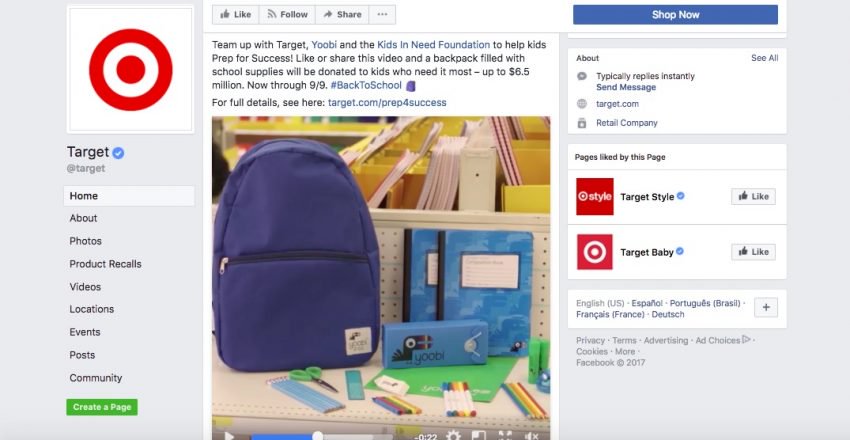
You can also host giveaways or promotions that have a charitable twist. This example from Target features a giveaway for back to school that also promotes an initiative to help kids in need.

Social Chats

Chats on social media can help you get followers engaged in real conversations. Twitter chats like #LinkedInChat can be especially popular. But you can also host chats in comment threads or livestreams on other platforms.

Flash Discounts

The beauty of social media is the ability to share information in real time. So you can reward your most engaged followers by offering quick discounts in real time. ASOS does this on its Facebook page occasionally, even changing its cover photo to alert followers.

Live Q&A’s

Using livestreaming features or just a text chat format, you can host a q&a session where followers can ask you questions about your business in real time.

Polls

25 polls

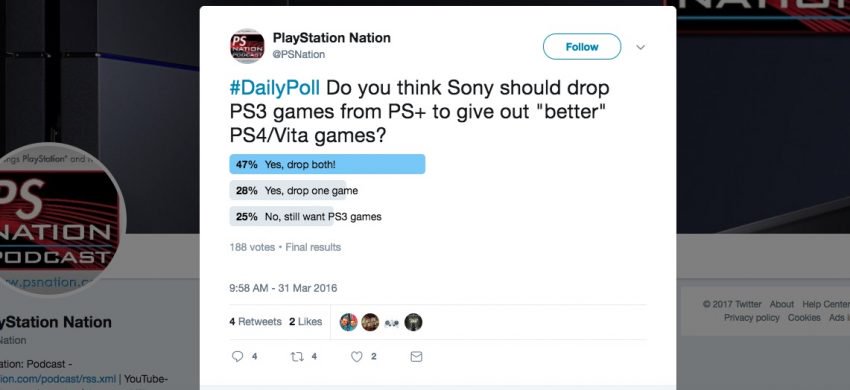
On a number of different platforms, you can create polls to get your followers involved and collect valuable insights, like this PlayStation podcast account did.

Influencer Campaigns

Partner with popular influencers in your industry to create content to share on your social accounts or even on their own platforms. This video series from DC Comics features interviews with people who are popular with the company’s audience.

Account Takeovers

You can also have influencers actually take over your account for a day to offer a behind the scenes view of their lives or a specific event.

Livestream Events

You can also host events or just share updates from events you’re attending for your business using social media. PetSmart uses Facebook Live to broadcast from various adoption and other charitable events.

Follower Voting Contests

Another idea for a social media contest, have followers submit photos or ideas for consideration. But instead of just choosing a winner yourself, have your other followers vote on the best entrants. Eggo has done this in the past by having people submit their favorite waffle recipes and then letting followers pick their favorites.

Logo Design Contest

25 logo

Instagram made use of this campaign back when it redesigned its logo, encouraging users to make their own versions in various mediums. You could try a similar promotion on Instagram or any other platform with photo capabilities.

Mascot Social Profiles

Your brand likely has its own account on many social media platforms. But you can explore a different angle by letting your company’s mascot or logo have its own account. This is popular with sports teams. But even Allstate’s “Mayhem” has its own Facebook page.

Social Challenges

One of the most popular examples of this is the Ice Bucket Challenge from the ALS Association. The idea was that people would film themselves having buckets of ice dumped on their heads, then challenge their friends to do the same, all while spreading awareness about ALS. Challenges like this can increase the chances of your campaign going viral.

Online Scavenger Hunt

Another type of online challenge, you can create a sort of online scavenger hunt to have customers post specific types of photos on a social site like Facebook or Instagram, or even on a Pinterest board. Online retailer Modcloth did this with its Something Modcloth, Something You campaign.

Casting Contest

Or you could give your customers the opportunity to appear in one of your ads or promotions with an online casting call. One example of this type of campaign is #CastMeMarc from Marc Jacobs, where followers could submit photos and applications on social media.

Location Based Contest

Platforms like Facebook and Instagram allow you to tag your location in specific posts. So if you have a physical store or are present at a particular event, you could have customers check by creating a post at that location and then choosing a winner from those recent posts.

The 5 Personality Traits All Entrepreneurs Must Have

5 person

Image credit: DragonImages | Getty Images

Entrepreneurs following their passion succeed far more often than entrepreneurs who are in it for the money.

By Sujan Patel

Success isn’t defined by how well you did in school or how many degrees you have. It isn’t based on where you grew up or who your parents are. It comes down to your personality, your mindset and your outlook on life.

Contrary to popular belief, you don’t have to be a type-A person to be a successful entrepreneur. In fact, it’s probably better if you aren’t. Entrepreneurs tend to be more “street smart” than “book smart.”

According to a recent study by CPP Inc., the top two personality traits entrepreneurs possess are perception and intuition. This is because success doesn’t come to those who are smartest. Success comes to those who see opportunities and take them.

Think you may have what it takes to be an entrepreneur? Here are five other personality traits entrepreneurs must have:

1. Passion
Entrepreneurs aren’t in it for the money. While that may be an added bonus, the true benefit is doing what they love. Building a business takes a lot of time and effort. It means putting in longer hours and doing extra work. If you don’t love what you do, you’re not going to want to do what it takes to achieve success.

Entrepreneurs aren’t afraid of hard work because they are so focused on their dream and their vision. They don’t give up when a challenge arises. They stick with their passion and see it through. As Steve Jobs once said, according to the Smithsonian Institution, “I’m convinced that about half of what separates the successful entrepreneurs from the non-successful ones is pure perseverance.”

2. Motivation
Entrepreneurs are dedicated to their work. They aren’t reliant on a manager or colleague to push them toward their goals or to get their work done. Their drive comes from within and allows them to motivate others in turn.

In his book, “Leaders Eat Last: Why Some Teams Pull Together and Others Don’t,” motivational speaker Simon Sinek writes, “If your actions inspire others to dream more, learn more, do more and become more, you are a leader.”

Entrepreneurs know how to communicate their dream and inspire others to join them on their journey to achieving it.

3. Optimism
When you’re just starting out, it can seem like getting your business off the ground will never happen. But entrepreneurs don’t think like that. They are optimistic about the future and are always looking ahead.

In his essay “Thoughts on Various Subjects,” Jonathan Swift wrote, “Vision is the art of seeing things invisible.” Entrepreneurs have a vision they share with others. Their team understands why they do what they do, what the goal is and what their role is on the path to success.

To be a successful entrepreneur, you must be goal-oriented. But it’s not enough to just set goals. You must make a plan and do everything you can to reach those goals. Everything you do must have a purpose.

4. Creativity
Entrepreneurs don’t think the same way as everyone else. They see the world differently and think outside the box. Businesses are built on big ideas, and those big ideas need to come from a place of creativity, from a way of thinking that differs from everyone else’s thinking.

In “Conversations with Maya Angelou,” Jeffrey M. Elliot quoted Maya Angelou as saying, “You can’t use up creativity. The more you use, the more you have.”
Entrepreneurs are always looking for new ways of doing things and how they can make them better. They aren’t satisfied with the status quo. By being creative, they come up with ideas that change the world.

5. Risk-Takers
Risk taking is par for the course when you’re starting a new business. But taking risks shouldn’t scare you. It’s necessary to achieve your goals, and successful entrepreneurs understand this.

In his book “The Four-Hour Workweek” entrepreneur and author Tim Ferriss writes, “What we fear doing most is usually what we most need to do.”

If you’re afraid to take the leap, you’ll never get anywhere. Staying complacent will never allow you to achieve greatness. Entrepreneurs don’t let uncertainty and potential failure stop them from doing what needs to be done. Instead, entrepreneurs look at challenges and risks as opportunities, not as problems.

As businessman Robert Kiyosaki wrote on Twitter, “Everyone can tell you the risk. An entrepreneur can see the reward.”


7 Choices Every Entrepreneur Must Make

7 choices

Image credit: UpperCut Images | Getty Images

By Kimanzi Constable

One aspect of entrepreneurship is starting a business. The bigger aspect is deciding how you will live your life

In April of 2012, my father died at the relatively young age of 54. His death was a shock. At his funeral I kept replaying the last few conversations we had. The one thing he said in those conversations was that he wished he had done more. He told me he had so many dreams, goals and visions of entrepreneurship that he had never done anything about.

He told me to learn the lesson he never learned: don’t die with regret.

His death was the wake-up call that started me on a journey to do what I wanted for my life and business. I left a miserable job to follow my dream of being a worldwide entrepreneur. I lost over 100 pounds, moved from Milwaukee, Wisconsin to Maui, Hawaii, where I lived for two years. Now I travel to 30-plus countries a year for consulting gigs at companies.

Along the way, I learned seven key lessons about living a life without regret to build a business that creates freedom. Here are seven choices you’ll regret at the end of your life if you don’t do something about them today.

1. Not truly living.
Too often, we let our doubt and fear hold us back from the amazing life we could be living. We have so many things we want to do in life, yet, we never do.

Truly living doesn’t mean you’re skydiving every other day or you quit your job on the spot. It means you don’t hold back. You chase those dreams and work hard on the goals you’ve set. You ignore doubts and create an amazing life. It means that no matter how many times you fall, you get back up and keep pushing forward. You don’t settle until you’ve built your dream business and grow it beyond yourself.

2. Not creating big goals and chasing your dreams.
Most people spend 40 to 60 hours of their week working. When you spend that much time doing something, it will affect your life one way or another. If you’re doing work or a business that makes you miserable, every other part of your life will be affected.

There are opportunities all around us. Entrepreneurs are making their dreams a reality as you’re reading this. It’s not going to be easy and it will take time, but it will be worth it. Sit down, create goals that get you towards your ultimate life and business goals, then get to work making them your reality.

3. Accumulating too much stuff.
When I moved to Hawaii, I was shocked by how much stuff I had. We go through life getting things and saving them, we’re afraid to throw things away that we don’t use. Generally, if you haven’t used something in the last year, you probably don’t need it (there can be exceptions, of course). That stuff creates clutter, which will lead to stress.

At the end of your life, you won’t remember any of that stuff but you will remember every incredible experiences. The “stuff” isn’t only physical items. It includes mental clutter and bad relationships. Declutter everything that doesn’t fit with the goals and your “why”. You will enjoy freedom and clarity once you do.

4. Letting envy sidetrack you.
Unfortunately, envy is a part of human nature but there are some entrepreneurs who know how to deal with it. If you can’t control envy, you’ll definitely live a life of regret and get sidetracked on a daily basis. Social media makes it easier to see the success of others and that can mess with you. Be grateful for your life. Be grateful that you are alive. You may not have as much another entrepreneur but you will if you do something about it.

5. Constantly comparing yourself to other people.
As I made big changes in my life, one way I measured my progress was comparing my results to what other entrepreneurs were doing. I learned the hard way that comparing yourself to others only leads to bitterness and heartache. Your journey is your journey and shouldn’t be compared. Make changes at your own pace. When you focus on what someone else is doing, you lose sight of your path and fall off.

6. Letting negative people hold you back.
We’re excited to tell our friends or family about changes we’re making in our lives. Sometimes they’re not as excited as we are. Sometimes they’re even negative. If you want to move forward, you have to stay away from negative people. Negative people aren’t happy with themselves and will poison your progress. Pretty soon you’ll start to believe what they’re saying and quit.

Get rid of the negative. You’ll live a happier life.

7. Starting tomorrow.
We always think we have more time but we’re not guaranteed a tomorrow. Everyday is a gift that we should live as if it were the last. The time to start is today because tomorrow may never come. Start today and tomorrow you’ll be closer to living out your dream.

Start today and you won’t die with regret in your heart.

I can tell you from personal experience that chasing your dreams and building a business is hard work. There are many ups and downs. There are many days when you want to quit. The best thing you can do is to take it one day at a time. Instead of focusing on the big changes you want to make, focus on waking up and doing what you have to do that day. As you take it one day at a time, you’ll look up after a while and realize you’re there.

Life is too short to spend even a single moment miserable. Chase those dreams, build your business and create an amazing life. Come to the end of your life with a smile on your face knowing that you have few regrets.

Five Small Habits That Will Make Your Small Business More Successful

5 habits

Shutterstock

By Jared Atchison

One of the keys to business success is looking after the small things, but it’s not just a case of one and done.

That’s why it’s important to keep doing the small tasks that help your business to grow, day in and day out. Here are some good business habits that will help any enterprise be more successful.

1. Delegate

Ever felt that you have too much to do in too little time? Chances are you’re trying to do everything yourself, which is a common business mistake many entrepreneurs make. Just because you can do everything yourself doesn’t mean that’s the best use of your time, or that you’re the best person for the job.

Instead of doing everything yourself, you need to learn the art of delegation. Although I still struggle with it, I’m getting better. I work with some of the most amazingly talented people in the world, and I trust them to make the right decisions and do great work.

Instead of micromanaging, we assign tasks and responsibilities to each person in the team. That means everyone’s working to their strengths and the whole business benefits. The sooner you learn to delegate, the better it will be for your business and mental health.

2. Be Frugal

Being frugal is vital, especially in the early days before your business has a consistent track record of profits.

Often, entrepreneurs go crazy on spending big bucks for fancy equipment, office space and so on. That’s a terrible idea, because overspending can leave you out of pocket, and stop you from reaching your long-term business goals.
If you find a way to reduce cost, go with it. The more money you can save, the more you can keep — it’s that simple. And if you do have cash burning a hole in your pocket, try investing it in something that will grow your business rather than the latest must-have gadget.

3. Track Mentions and Reclaim Links

Tracking brand mentions lets you see what people are saying online about your brand and can help you understand your customers and respond to critics.

While it takes time to build a solid reputation for your small business, it can be undone in just a few hours if you’re not paying attention and responding to people’s comments and concerns. That’s why it’s essential to monitor your social media presence and brand mentions on a regular basis.

Now, monitoring can be a challenge if you don’t have a way to automate and streamline the process. We use BuzzSumo and Google Alerts to discover brand mentions online.

Along with monitoring mentions, you’ll also want to build links to your website to enhance your online reputation. With BuzzSumo, you can also find opportunities on the web where you’ve been mentioned but haven’t been properly linked to. Then, all you have to do is make contact with the site owner and ask politely for the link. Most site owners are happy to oblige.

4. Improve Your Time Management Skills

Ever felt that you need more time to get things done? Want to know the secret trick that helped me add more hours to my day?

The best tactic is to start waking up early. I used to be a night owl for many years and thought I was being more productive, but as it turned out, I was just lying to myself. I now wake up at 5:15 a.m. every day, and I can say that I’m at least 10 times more productive than when I used to work late nights.

Time blocking is another great habit that’s helped me boost my productivity. The concept is similar to creating a financial budget on paper, except in this case you’re planning to spend your time rather than money.

All you do is block out time on your calendar for the main things you want to achieve. This allows you to focus on your top priorities, create hard boundaries, and live your life the way you want.

5. Meet a Leader You Admire

We all have people we admire. Whoever it is, you’ve probably dreamt of meeting them in person or online. The best thing is you can get valuable insights from those leaders that you’d spend months, if not years, learning on your own.

Ideally, you want to learn from someone who has experience, a proven track record, and who practices what they preach. You can meet leaders at conferences and ask to interview them, or simply ask for their insights into a specific topic or problem.

The worst that someone can say is “no, sorry” – and if you don’t ever ask, you won’t ever receive.

By allowing you to focus on your strengths, track your online reputation, manage your time and money and get insights from mentors, these five practices will make a huge difference to the productivity of your small business and will help you grow as a person. Make them daily habits, and you’ll be poised for business success.