How to Use Social Selling for Your Small Business

social-media
monitis.com

Your network is your net worth

By Brian Sutter

“Your network is your net worth.” Ever heard that saying?

It goes all the way back to the days of paper Rolodexes, but it is just as important now.
The idea of using your network as a business asset is why social selling matters. And why every small business should be doing more of it.

networthing
Image source: Social Selling 2017 Trends Report

At its most basic level, social selling is similar to networking via social media… except it’s a little different.

To understand how it’s different may require some rewiring of how you think about social media.

You need to understand what social media is good for, and what it’s not good for. Social is a medium for connections – not for broadcast advertising. It’s a channel to build an audience and influence – not to send out thousands of spammy messages to people who have never heard of you or your business.

To give you an idea of how social selling fits into a social media strategy, let’s look at how most businesses develop their social strategy.

The fourteen stages of social media maturity

1. You have social media accounts. (You’ve at least dipped a toe into the water of social media…)

2. You post to these accounts every week or so.

3. You follow other people and organizations on social.

4. You respond to customer feedback or complaints on social, but sometimes it takes a few days to get around to it.

5. You begin to share other people and organizations’ content, in addition to your own.

6. You begin to comment on other people’s content. You begin to actively try to get your followers to comment on your content. (This is arguably the beginning of social selling.)

7. You start to ask your employees to share or comment on your content on social media. This is called employee advocacy, and it can support social selling. (Many small businesses are already doing this: We found that 76% of companies involve their employees in marketing efforts.)

8. You begin strategically paying for some of your content to get expanded reach. You are investing enough in social media to start to take it seriously. You believe it can get results.

9. Customer service on social media becomes a priority. You reduce how long you take to respond to customer complaints and feedback to a day or less.

10. You realize it’s okay to show your brand’s personality online, and to show people what it’s like to work at your company. You realize there is a human resources dimension to social. It could help you find good hires.

11. You become more adept at building an audience, and learn how to get that audience to respond. You may also develop personas to target for audience building (which is another level of sophistication that marks a social selling program).

12. You, or some of your sales staff, begin to build personal followings that may overlap a bit with your company’s social media audience. You begin to position yourself as an authority and an influencer in your industry or niche.

13. You begin to see your audience building/social media work as preliminary lead generation. You may begin to use some marketing automation to nurture the people who behave like potential leads.

14. You evolve into full-blown social selling. Specifically: You begin to strategically nurture relationships with some of these leads. You do this not by sending them direct messages or LinkedIn Inmails bluntly pitching your services, but by sharing information that would be useful to them.

This information – and the messages you send to gradually build a relationship over time – have no or very little sales messaging in them.

You realize that your prospect/new friend is keenly aware that you have a product or service they might someday want to buy. You are aware that your prospects/leads/audience is super-sensitive about sales pitches, and they tend to tune them out, if not overtly run from them.

Trying to do the hard sell with these people will only erode the trust you have worked so hard to build.

So, you do not push the issue. You make yourself useful and be friendly. You do this in such a way that when members of your audience are ready to buy, you’ll be the first person they think of. You maintain your relationship with them via social media (and perhaps a coffee at a conference or two), ideally personalizing every message you send them so they feel like you’re being genuine, not just moving them through a sales machine.

Of course, some companies will skip steps in this continuum. And some companies may accelerate through phase one to ten in a week, if they have a culture and a staff that is social media savvy.

But in general, that list is roughly how things evolve.

So, as you can tell, social selling requires some finesse. As good networking always has. And while the primary channel that social selling is done through is obviously social, good social selling builds so that you can email people, too. Or even meet a few people in real life.

If this sounds vaguely like the new Sales idea of “consultative selling,” you’re starting to get it. Social selling is most definitely consultative. So much so, that Tim Hughes, in his book, Social Selling: Techniques to Influence Buyers and Changemakers, believes that soon “recruitment for salespeople with Klout scores of 50 and above will become the norm.”

Klout scores of 50 or higher don’t happen overnight, but they are achievable:

As you build your influence and reach online, you become an authority. A trusted person. And that trust is an essential ingredient to making a sale. Managed well, it can absolutely translate into more sales for your small business.

Almost everyone needs to be thinking about their level of influence online. In many ways, it’s the currency of social media, and of business, too. And given that so many small businesses are already having success with social media, it seems like to time for more small businesses to evolve towards a social selling model.

Article content from Score.org

 

How Many of the 4 Essential Entrepreneurial Traits Do You Have?


entrepreneur 1
businessnewsdaily.com


Successful entrepreneurs can have different backgrounds or strategies, but many share these four traits

By Dhaval Patel

What makes someone an entrepreneur? Some think entrepreneurs are born, others believe successful entrepreneurship comes from years of education or being lucky enough to have an influential mentor.

The truth is that entrepreneurs come in all different personality types, and come from all walks of life. There isn’t one simple way to determine what makes an entrepreneur. But, many entrepreneurs do share particular characteristics, regardless of their personal style or their business type. How many of these four important traits of entrepreneurs do you share?

1. Vision
Entrepreneurs see things others don’t. No, not in a sixth sense kind of way — rather, entrepreneurs see opportunities and and potential solutions where others have not. To an entrepreneur, the fact that something hasn’t been done before doesn’t discourage them, it excites them. And when they have an idea or a concept that forms in their mind to fill such a niche, they have the vision to see it through.


Entrepreneur 2
femaleentrepreneurassociation.com


Because of how clearly entrepreneurs see their vision, they are willing to put in ridiculous hours and energy into their project. They become obsessed with making their vision a reality. They can go deep into the process and can come across as being very intense. Entrepreneurs might go through trials and tribulations, but their unshakable vision keeps them going.

This goes beyond merely having goals and wanting to realize them. It speaks to having a purpose and being able to follow it through.

2. Self-possession
Someone who is self-possessed isn’t to be shaken easily. They are secure in who they are and their ideas.

Self-possession is an extremely important trait of entrepreneurs, because they will be faced with many obstacles on their journey. Usually, entrepreneurs are creating solutions or businesses where they have not existed before. As such, it can be difficult to obtain funding, to compete in different markets or even to gain the unwavering support of family and friends. That’s why having a strong sense of and belief in the self is vital to the entrepreneur’s success.

Does this mean entrepreneurs are self-obsessed? Sometimes, sure.

3. Drive
Entrepreneurs always seem to have more energy than the average person. Part of this is the vision discussed above, part of it is drive. Not only does the entrepreneur have the ability to generate an idea and believe in themselves enough to see its validity, but they have the inner drive to put in the work necessary to make it happen.

An entrepreneur doesn’t need a boss looking over their shoulder or a manager telling them what to do. They have an inner sense of purpose that propels them forward. This allows them to work tirelessly toward their goals.

This drive can help create a movement around their work. The intensity that entrepreneurs feel for their passion projects can inspire passion in others too. Moreover, this added help and support from others can be part of the fuel that makes their vision a reality.


Entrepreneur 3
smithentrepreneurshipgroup.com


4. Flexibility
An entrepreneur has a vision, and they have the ability to see it through. But they also have the ability to be flexible and alter their vision to make it align with reality.

Entrepreneurs may have their heads in the clouds, but their feet are on the ground. They understand that to make their vision a reality, they need funding, assistance and any number of other resources. As such, they must be adaptable to working with others and adjusting their vision to suit these real world considerations.

While entrepreneurs are dedicated to their dreams, they can also see the benefits of changing it to be more inclusive or to improve the final product, service or business. They are open to hearing ideas and feedback and are able to use criticism in constructive ways.

It’s a simple fact that entrepreneurs come in all shapes, sizes and styles. However, in spite of these differences, they do tend to share certain inherent traits. Do you want to gain more of an entrepreneurial spirit? Cultivating these traits will help you on your journey.   entrepreneur.com


5 Tips to Save Time and Be a Healthy Entrepreneur

Influencive

Take action on these five ways for you to avoid becoming the unhealthy entrepreneur and see positive results right away

By Eric and Chris Martinez (Influencive.com)

Without your health, you cannot acquire and enjoy more wealth, and you cannot love yourself entirely.

The past seven years we have been to many conferences, seminars, and retreats all around the world, and its mind blowing how many entrepreneurs put their health on the back burner to acquire more wealth. Keep in mind, we are not expecting to see people being jacked or who look like bodybuilders. We don’t even look like that and we have been fitness consultants for the past decade.

What we have witnessed is poor body structures due to being sedentary and on the computer all day, no muscle mass what so ever, more body fat than there needs to be, lack of confidence in appearance, lack of activity, horrible eating and drinking habits.
“Play the long game in business. It’s not a sprint, it’s a marathon.” – Gary Vaynerchuck
While we agree with what Gary says, why not take this same concept and apply it to your health and fitness goals? What good does it do to acquire all this wealth and crush it if you are not healthy and happy? Money can never buy back your time, happiness, and overall health.

Don’t be that person battling health issues in your 30’s.
To all the Millennials out there, take control of your health and fitness now.

We all have one life, one legacy, and one body to maximize. There is absolutely no excuse as an entrepreneur to not put health and fitness at the forefront. It’s time to make it a priority in your life and be the leader you are. As entrepreneurs, we should all be striving to look better, feel better, and perform better.
We have come up with five ways for you to avoid becoming the unhealthy entrepreneur.

Dynamic#1 Knowing What Your Why and Your Purpose Are Part of Your Fitness Journey
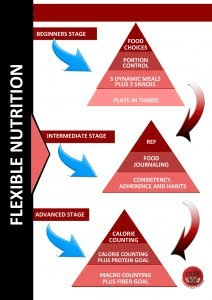
Just like in business, we should all know our purpose, and we should have a clear vision on what we are trying to accomplish the next 6 months, year, 3 years, and even longer. You must use this same concept within your health and fitness journey. Take the time to ask yourself, “Why do I want to lose X number of pounds?”
“Why do I want to look great for this event or vacation?”
“Why do I want to wear a bikini or fit into that wedding dress?”

The list goes on and once you identify your why and purpose in your health and fitness journey, you then can start building out that vision. Once you have the vision, set goals, and timelines to make you work harder, build habits and be patient with them. Think of building a foundation for a house. You start at the bottom and then level up once you gain more experience, momentum, and knowledge.

Most importantly, turn this health and fitness journey into a lifestyle you can see yourself doing for days, weeks, months, and years on end.

#2 Seek more Self-Love and Stop Comparing Yourself to Others

Tomorrow we want you to wake up and tell yourself, “I love who I am, I love my body, and I am enough.” You might be wondering, “Wait, why do you want me to say that to myself if I don’t mean it?” If you are always bashing your body each time you look in the mirror, your mindset, confidence, and self-worth will be damaged each day, and that is not the carry over you want each day as an entrepreneur.

We want you to tell yourself this each morning but still have the intention of wanting to do better with your overall health and body image. Again, this is a marathon, not a sprint, and if you are putting in the work each day you will look better, feel better, and perform better. Programming your mindset to be positive and give yourself more self-love will make you work harder instead of shaming yourself.

When it comes to comparing ourselves with others, just stop doing it.

We know social media plays a huge role in comparing body image, business, and lifestyle to others. Make sure your fitness goals are realistic and attainable. Worry about yourself only. Stop following people that you constantly compare yourself with, it’s extremely toxic in all areas.

#3 Use REF with Exercise and Nutrition

Our mentor Eric Helms taught us a powerful acronym.
REF: realistic, enjoyable, and flexible.

We cannot emphasize how important this is when it comes to your health and fitness journey. We have mastered this ourselves and have used it working with over 1,000 clients around the world.

Let’s break REF down a bit more.

Realistic
There is no one-size-fits all diet or exercise program for everyone. Do what you can see yourself adhering to for days, weeks, months, and years on end.

Find a nutrition and exercise program that is realistic for your needs, schedule, and lifestyle. Not everyone can spend X amount of time in the gym, not everyone likes doing just weights, and not everyone can follow a certain diet.

Enjoyable
This is probably the most important letter in REF.

Plain and simple, if you do not enjoy a nutrition or exercise program you will not adhere to it, work hard at it, and you will eventually give it up.

It’s the same thing with your business. If you hate what you are doing or building, you will not enjoy it and will not work hard at it.

We really encourage you to experiment with various nutrition and exercise programs to see what you really enjoy, look forward to doing daily, have fun with, and adhere to the most. Again, play the long game with this. It may take a little while to figure this out and that is perfectly okay. It took us years to find out what was realistic, enjoyable, and flexible for ourselves.

FlexFlexible
As entrepreneurs, we have the ability to be flexible with our day to day schedules and lifestyle due to being, our own bosses. When it comes to health and fitness, you want to acquire a similar concept with flexibility within your nutrition and exercise programs.

For example, maybe one week you have to travel, and stress will be higher, and you won’t have as much time as usual. It’s okay, this is where being flexible comes into play, and you have to pivot and adapt some. Instead of counting your calories or meal prepping, you can have a meal prep company make your meals for you when traveling, or you can make safe-healthy choices when eating out.

Maybe you can’t get to the gym every day. No problem, get in there 2-3 times only and just make each of the sessions longer. Again, it’s about keeping it simple and being flexible. Not every day, week, or month is going to be glorious.

Do your best with what you have and move on, same thing in business. Not every day, week, or month is a milestone in revenue. It’s about being consistent, not perfect.

#4 Manage Stress, Sleep, and Activity

We are pretty sure you are aware of how harmful elevated stress, lack of sleep, and lack of activity are for overall health. Let’s break each one down anyway.

Stress

As entrepreneurs, we know how stressful business can be. Stress has got the best of us many times and will continue to going forward. But stress comes with the territory and is part of being an entrepreneur.
The key is to manage it as best you can and not let it control you and your mood.

Try and start your day off with a good morning routine dedicated to you to so you can program your mind right for the day.

During the day, take frequent breaks when you feel overwhelmed, go for a walk, meditate, or take a power nap to regroup.

Most importantly, after a long day of putting in work and grinding, make sure to implement a wind down routine so you can calm down and get a good night’s sleep. Some examples of a wind down routine are as follows:
Go for a walk
Read for 30 minutes
Listen to a podcast
Meditate
Stretch your body

Sleep

The healthy mummy
healthymummy.com

Make sleep a priority. You cannot perform at an optimal and effective level with insufficient sleep. Get at least 6-8 hours of sleep every night, implement a wind down routine, turn your phone off, and get some damn zzzz’s.

Stay Active

This one is so underrated and so important to overall health. You already know we have stressed the importance of doing a form of exercise each day, but we want to go a bit deeper here. We don’t want to get too scientific here either, but one way to burn more calories is to increase your daily non-exercise activity.
Some examples are as follows:
Get up more frequently
Take more walks
Take the stairs
Park further away
Use a step counter
Just move more

We promise by doing this you will see a significant difference in weight loss over the course of time due to burning more overall calories.

#5 Reward Yourself

There is no point in doing all this if you don’t reward yourself. Rewards naturally make us work harder as humans as they cause the release of dopamine.
After you nail a goal, reward yourself with something.

On the weekends, reward yourself and indulge some, but just don’t go overboard and regress on your hard work. Some examples of rewards are as follows:
Full body massage
Breakfast, lunch, or dinner out at a nice restaurant
Go to a professional sporting event
Have some alcoholic beverages
Go buy something you want
The list goes on

If you are not celebrating the small wins, you won’t enjoy your health and fitness journey as much.

Same thing in business. Celebrate those small victories and keep the momentum high.

We hope you find these five tips helpful and most importantly, that you put them into action. If you are a true entrepreneur, we know you will take them seriously and take action.

Don’t be that unhealthy entrepreneur. Take a stand now and make some changes for your family and most importantly, for you.

Are You An Entrepreneur?

Edison
definingcreativity.com

By Jill Griffin

en·tre·pre·neur
ˌäntrəprəˈnər/
noun: entrepreneur; plural noun: entrepreneurs
A person who organizes and operates a business or businesses, taking on greater than normal financial risks in order to do so.

I consider myself an “accidental” entrepreneur. Early in my career, a risky job move ended badly and it had a profound effect on me. The powerlessness I felt in that situation forever changed me. My heart told me I could never be an “employee” again. And I listened.

So after some soul searching, I did the next best thing….I became a consultant of sorts helping businesses grow loyal customers. To help pay the bills, I was a part time marketing lecturer at the Austin campus of the University of Texas.
Things took off for me when my first book was published.

I’ve sometimes wondered why I chose this route when others who might have been faced with the same roadblock would have reacted differently. What was it that made me walk away from safety instead of just finding another ‘safe’ place to work? The part of that definition of entrepreneur at the beginning of this piece that says ‘…taking on greater than normal financial risks’ almost didn’t occur to me at all in making my decision. I just stepped out. Sort of on faith. I’ve never looked back and wondered “what if?”

Steve jobs
Slashgear.com

Over time, I have met many others who have chosen this entrepreneurial path. I’ve come to admire their tenacity and willingness to walk on the high wire and do their calling, whatever it may be. If you think about all of the great things that have been invented in the past century or so, most of them were created by entrepreneurs. May I call you on your iPhone to discuss this further? Yes, Steve Jobs had an entrepreneurial heart and a clear vision for how to execute it.

wrightbrothers
biographycity.com

May I fly out to meet you and discuss this? Those Wright Brothers were entrepreneurs, too. They were relentless in their pursuit of manned flight. We are all grateful for that. But think of how brave and seemingly impossible this undertaking this was. No one had ever flown before. It sounded crazy. I am sure they were ridiculed unmercifully by some. They kept going, and one day, they lifted off and they took the rest of us with them.

Or maybe you could drive over to meet me in your automobile, built on an assembly line, an idea hatched by the great Henry Ford. But Ford wasn’t always successful. He had two famous and very public failures before he found success. Once, his company was dissolved, and once he walked away of his own volition out of frustration. But then…

That’s what entrepreneurs do. They are single minded, and they are filled with grit. They lack the ‘off switch’ that most people have that says ‘enough. I’m tired of trying.”
Perhaps the most famous of these never-say-die individuals was Thomas Edison. He tried and failed ten thousand times when he was trying to invent the light bulb. Most of us would have given up after a hundred tries. Or five hundred. It has been said that he would lock himself in his lab and forget to bathe or eat or sleep. That’s the very definition of relentless, isn’t it?

Most entrepreneurs have encouragers in their circle. I certainly did, and I am thankful for them. Edison’s first encourager was his mother. As a schoolboy, he didn’t fit in with the other kids. One day he brought home a note from the school principal that said that he was no longer welcome at school, that he was “addled” and in essence, unteachable.

He dutifully gave the note to his mom without ever reading it. Later, when he asked what the note said, she told him that the school thought he was too exceptional and smart to be taught in a regular school like the others. After his mother passed away, he found the note among her things and realized what a profound and life changing thing she had done for him. She had made him believe that he was exceptional and he went out and proved her right.

My advice? Listen to your heart and follow it relentlessly. Never give up. Find your encouragers.

Then, go out into the world and change it.

Appeared in Forbes.com

At-Your-Desk Yoga Poses for Small Business Owners

Shutterstock
Shutterstock.com

Work some yoga into your day without even leaving your desk

By resources.ehealthinsurance.com

As a small business owner it’s not uncommon to work more than your usual 40-hour work week, which can sometimes leave you feeling like there’s limited time for other activities. To help kick-start a fresh, healthy year we’ve put together some easy, at-your-desk yoga exercise techniques that will help keep you fit, feeling rejuvenated, and ready to take on the next task!

Seated Meditation – A quick mental reboot

Yoga 1

1. Find a semi-quiet area, with a hard surface to sit on – a chair or the floor will do
2. Cross your legs or keep them straight – your preference, keep hand/arms relaxed at your sides
3. Close your eyes and breathe in and out at a steady pace for 1-2 minutes

Leg Stretch – Get the blood flowing

Yoga 2

1. Find a sturdy surface to lean against – a wall, table, or your desk
2. Place one hand horizontally or vertically on the surface – whichever feels most natural
3. With the opposite hand, hold the front of your ankle and stretch your leg inward, repeat this step on the other leg

In Office Push-Ups – Now you’re moving

Yoga 3

1. Find an open space, with a minimum length of your height
2. Place hands horizontally, shoulder length apart – aligning your feet with your hands, so that your body is in the “plank” position
3. Using the strength of your hands/arms lift yourself up and down at an even pace for 1-2 minutes

These types of quick, yoga inspired exercises allow for a nice pick me up during a long work week and even aid in your body’s ability to remain fit and agile when done consistently. As always, it’s a good idea to check with your doctor before beginning a new fitness routine. We hope you enjoy!

As shown in ehealthinsurance.com


That Potential Client Is Judging You So Focus on Making a Good First Impression

Businessmen handshaking

Those first few seconds of a meeting could make or break a business deal. Here’s how to make and leverage a good first impression

By Drew McLellan

No, thin-slicing isn’t a phrase to describe the way you cut a loaf of bread; it’s a term that denotes what we do upon first meeting people. According to Oregon State University professor Frank Bernieri, people make immediate judgments about others from observing only mere seconds — aka a “thin slice of” — their behavior.

“From the evidence gleaned in not much more than a few glances, we decide whether we like another person, whether they’re trying to flirt with us, whether they’re friend or foe,” Bernieri suggests in a Guardian article.

Regardless of environment or circumstance, this very thin-slicing — otherwise known as making a first impression — can make or break your chances of coming across in a positive light, and it’s especially crucial when vetting new business.

Case in point: Guard for the Golden State Warriors, Stephen Curry, opted against doing business with Nike in 2017 because during an in-person pitch, a Nike rep butchered Curry’s name. To make matters worse, the rep left a placeholder name — Kevin Durant, Curry’s teammate — in the published write-up. Because of this, the NBA player decided instead to partner with Under Armour. It’s all about first impressions. Screw it up once, and you’ve likely lost business for good.

The scene is no different in the marketing industry. An owner prepares to nab a prospective client, but when it comes to awareness of his behavior and presence during the pitch, the owner can’t see the forest for the trees. Even if that’s not the case, the owner hesitates to identify areas of specialty for fear of leaving money on the table. The result? He comes across as he never intended: like a dime-a-dozen marketing sheep.

While the idea of lacking complete self-awareness (especially when doing business) is highly unsettling, there’s good news: If you put in the work, it’s preventable.
New business is not a New Year’s resolution.

Recent research from Statistic Brain found that more than 42 percent of Americans fail to meet their New Year’s resolutions. Often, failure is rationalized by excuses. Heenan says marketing agencies make their own set of failed resolutions and poor excuses: “They get off the gun, and they’re all excited, and they got this elaborate new business plan with all of these moving parts…By February, the gym is empty, and the agency efforts are quiet because ‘I got busy with client work’ or whatever.”

If you’re a company leader, it’s your job to focus on new business. No one should be more committed to growing a business as much as its company leader, period. Thus, recognizing the benefits of a good first impression is only the beginning; now, leverage it:

1. Continuously vet new clients — it keeps your agency alive
For marketing agencies, the time frame between meeting a prospect and onboarding him or her continues to recede. A study referenced in Hiver suggests 80 percent of leads require up to five follow-ups after an initial sales pitch is executed. That’s a lot of heavy lifting as it is, and the process will continue to linger if you don’t stay on the ball.

Ultimately, this can slow down processes across the board, so constantly vetting new clients keeps an agency moving and shaking; it keeps the cogs at a minimum. Mining for prospects is an exercise — a muscle that must be flexed day in, day out.
Additionally, rely on your team to keep your current clients happy while you’re out in the trenches, turning leads into long-termers. “New client and new marketing development are critical to the long-term sustainability of any business,” says New York-based marketing consultant Nancy Shenker. She suggests company leaders spend up to a third of their time focusing on the future to generate new client growth.

2. Don’t spread yourself too thin.
Marketing agencies — and often companies in general — have a tendency to spread themselves too thin to appeal to every prospect in every corner of the world. To create this marriage (where the agency’s integrity and the potential client’s needs meet in the middle), an owner must seek clients whose goals align with his agency’s — these clients are not only ready and willing to give you money, but they’re also going to stick around for the long haul.

Overextending yourself, your staff and your business by trying to be The Most Diverse Company in the Universe means removing what makes it unique in the first place as well as the niche services it offers to clients who need and desire it. And that’s certainly not the best impression to make, especially if it’s the first one.

3. Know your company and yourself — start seeing the forest for the trees.
As the head of a company, you’re always putting out fires. But don’t forget to set down the extinguisher from time to time to ensure the business plan you have in place is still intact. As an example, it’s fairly common to fear your biggest client — the mammoth who brings in the majority of your revenue — is going to leave (even if the fear is unfounded), but don’t let such scenarios consume you, your vision or your plans for the future. Keep an eye on what’s ahead, and remember your company’s integrity and what it represents.

But know that seeing the forest for the trees can only take you so far. Be sure you’re always evolving yourself as a leader as well as evolving the direction of your company. It’s important to keep track of day-to-day operations, but it’s equally imperative to remember your agency’s overall vision; you can’t move forward without it. And moving forward is what it’s all about.

So you’re making great first impressions and leveraging them to the fullest with new business. But don’t let it go to your head. Remember: Making those impressions requires agency owners to know their company, what it excels in, who will align with it and how a prospect will react to its pitch. Keep this in mind the next time you’re vetting a new prospect because you have just few seconds to convince.
As shown in Entrepreneur.com


Use This Google AdWords Hack to Lower Costs and Increase Leads

surprised-man
blog.hubspot.com

Single Keyword Ad Groups (or SKAGs) are a beautiful thing and can drastically help improve your AdWords performance

By Jason Parks

You might have heard a digital marketing guru throw the acronym “SKAG” out on the table but you were unsure of what it meant.

If you go to urban dictionary, it states that a skag is an unattractive woman. That is not what we’re referring to here. Single Keyword Ad Groups (or SKAGs) are a beautiful thing and can drastically help improve your AdWords performance.

Single Keyword Ad Groups are just what the name implies. They are ad groups with just one keyword in them.

Per KlientBoost, SKAGs are one of the strongest AdWords account structures. Neil Patel, a fellow Entrepreneur.com contributor and expert marketer, wrote that, “I Increased Sales When I Made this One Google AdWords Change,” which of course refers to Single Keyword Ad Groups. Sam Owen from PPC Hero reduced his cost per lead by 50 percent and increased leads by 106 percent when implementing SKAGs.

Here’s how Single Keyword Ad Groups can be a game changer for your business.

How it works
The premise is simple: Rather than grouping 15 keywords with two to three different variations of advertising copy, you associate a single variation of keywords to a single advertisement, where the title of the ad copy matches your keyword exactly.

So, when searching for any of your potential keywords on Google, the ad text will match exactly what was searched for. This will increase your relevance score (don’t worry, I explain relevance score below) and will, in turn, help you to achieve a lower cost per conversion.

Not only that, with a SKAG, you will be better able to control the budget for the keywords that are profitable within the campaign because you can easily make changes and adjust the budgets for each ad group.

Let’s say you are selling custom leather wallets. There are a lot of different ways someone can search for your product. By aligning your ad copy with one keyword, your relevance score will improve because the text in the ad matches the search term exactly. (If you are wondering why there are three keywords listed below, the reason is because these are broad match modifier, phrase match and exact match.)

You’ll notice “Custom Leather Wallets” is included in the title of the advertising copy, which should increase click-through rate when people see an advertisement that includes the exact search term for what they are looking for.

Keywords
Custom +Leather +Wallets
“Custom Leather Wallets”
[Custom Leather Wallets]

Ad copy

ad copy 1

If you knew that you converted well for “Leather Wallets Made in USA” you’d want to create a Single Keyword Ad Group campaign in the following format:

Keywords
Leather +Wallets +Made +in +USA
“Leather Wallets Made in USA”
[Leather Wallets Made in U.S.A]

Ad copy

ad copy 2

Let’s say you have a campaign which includes several SKAGs related to the fact that the wallets are custom-made. If one of those keywords is eating up a lot of your budget but not converting well, you can easily pause that ad group. Conversely, if you have a keyword that’s performing extremely well, you can also adjust your budget accordingly.

Getting started

For Larry’s Leather (a fictitious business I made up for this article) there are thousands of variations that someone can search for to find his wallets. For starters, I recommend setting-up five Single Keyword Ad Groups to see if you notice a difference in click-through rate and quality score.

There will come a time when you will be adding thousands of different keywords and ad copy variations utilizing Single Keyword Ad Groups, which is more complex.
If you are bidding on hundreds or thousands of different products and are looking for an advanced Single Keyword Ad Group strategy, I’d recommend reaching out to a PPC firm that can help in this area. Google has many partners where you can find a good company.

Importance of Quality Score

Any AdWords expert knows that your Quality Score is crucial for generating great results in AdWords.

Per WordStream, Quality Score is Google’s rating of the quality and relevance of both your keywords and PPC ads. A high quality score will result in a higher click-through rate and a lower cost per conversion. There are several factors that impact quality score:

  • Click-through rate
  • The relevance of each keyword to its ad group
  • Landing page quality and relevance
  • Relevance of ad text
  • Historical AdWords account performance

Single Keyword Ad Groups will help you increase your click-through rate, relevancy of each keyword and relevancy of the ad text. This can be a game changer in improving your PPC performance.


9 Strategies for Memorable Advertising When Your Audience Is Chronically Distracted

distracted
juliehyde.com.au

Attention spans have never been shorter, and consumers never have had so many options. You need a smart strategy to rise above the noise

By Eran Halevy

The advertising industry is big. In fact, when all the numbers from 2017 are tallied, advertising spending in the United States is projected to reach $207 billion. However, research shows that 64 percent of people find ads annoying or intrusive. A whopping 92 percent of online ads aren’t even noticed.

If you want to get results from your advertising efforts in 2018, you must adhere to certain rules. These nine definitely are worth remembering as you firm up your strategy for the new year.

1. Optimize your ads for declining attention spans.
The consistently shrinking attention span is one of advertising’s greatest challenges. Consider the following statistics: In a recent study, Microsoft revealed the average attention span has decreased from about 12 seconds in 2000 to about eight seconds today.

A study by Jampp shows that our attention spans decline by about 88 percent every year — especially thanks to technology and mobile apps.
Some sources estimate we are exposed to up to 5,000 ads daily — a sharp increase from a few decades ago.

Audiences suffer from declining attention spans, but they’re bombarded with more ads than ever before. With that in mind, it’s essential to embrace the KISS principle: Keep it simple, stupid.

2. Follow the ‘Rule of Seven.’
One of advertising’s golden rules is explained by the “Rule of Seven:” Most prospects will need to see your message at least seven times before they consider your offer. Don’t expect most people to convert the first time they see your offer. Instead, use different means and channels to get the same message across to them. You’ll increase the odds they’ll respond to your offer.

3. Retarget your ads to people familiar with your brand.
According to Marketing Metrics, the probability of selling to a new prospect is about 5 to 20 percent while the probability of selling to an existing customer is about 60 to 70 percent.

It’s much easier to market to people who already are familiar with your brand or who have been customers in the past than it is to “sell” people who are just learning about you. Research shows that retargeting your message to people who previouly have visited your website can result in 10 times the clicks and a 70 percent increase in conversions.

4. Sensory adaptation beats CTA color.
In one of its articles years ago, Hubspot famously proclaimed that “Red beats green” in terms of colored-button performance. For a long time, experts have touted red as the best choice for a call to action (CTA). Unbounce, on the other hand, says orange leads to more conversions. Others have found green, yellow or blue to be best.

So which color, really, produces the best results? None of the above. Color psychology has taken a back seat to an even more powerful underlying principle: sensory adaptation. In basic terms, our brains ignore anything that blends in with its surruondings. A green button will convert better on a page using a red color scheme and vice versa. You should ensure your CTAs stand out. Do this, and every color will convert well for you.

5. Segment and target.
Marketing Sherpa structured a study that compared the return on investment of targeted emails (sent to users based on their interests) with “batch-and-blast” emails (sent to everyone on the list). Segmented emails resulted in a 208 percent higher conversion rate than emails that weren’t targeted. Increasingly, advertising research emphasizes the importance of segmenting and targeting. More recently, marketing professionals are using artificial intelligence to develop sophisticated options for targeting users.

6. Focus on retention.
A recent study from Adobe Digital Insights found that ads are getting more expensive while reaching fewer consumers. Experts expect this trend to continue as users find more ways to block ads. Meanwhile, advertising platforms will struggle to increase revenue. To get the most from your advertising efforts, consider ways to retain users. It’s more economical than paying to reach them each time. Start building a user list you can segment into groups: an email list, a push-notification list and others.

7. Don’t ignore mobile.
Overlooking mobile users is perhaps the deadliest mistake any advertiser can make at this point in time. Mobile-only internet users outnumber desktop-only users. What’s more, research shows that engagement is higher on mobile devices than on desktop devices. If you don’t have a mobile-advertising strategy, you’re alienating more than half your potential customers.

8. Embrace the ‘less is more’ principle.
It’s easy to assume that presenting people with more options will yield a better ROI, but that isn’t always the case. In fact, psychologist Barry Schwartz argued against this in his book “The Paradox of Choice.” He cited a jam study conducted by Sheena Iyengar and Mark Lepper.

The pair of researchers divided shoppers into two groups. They presented the first group of shoppers with a table that contained six varieties of jam. The second group of shoppers were offered a table containing 24 varieties of jam. More people viewed the table with greater options, but 10 times as many people actually purchased from the table with fewer varieties of jam. You can do the same: Provide fewer options, and you’ll see conversions increase.

9. Use text strategically.
An image is worth a thousand words — until it isn’t. A lot has been said about the power of images to drive action and boost advertising conversion. But an increasing body of research is finding that when used properly, text is even more effective than rampant visuals. Launchbit found that text-heavy banner ads generally result in more clicks and conversions than banners that consist primarily of graphics and colors. There’s an important caveat, though: Ensure your text communicates exactly what users will gain when they click your ad.


Are You Building a Business or Creating a Job for Yourself?

Ghost employees
waspbarcode.com

Is it just you behind a desk or are you delegating the work? The distinction is an important one

By Doug and Polly White

We recently spoke with a member of our coworking space who owns a PR/marketing company and is the only employee of his company. His firm is successful and has been in business for more than three years since he left a large organization where he was the head of PR.

Our conversation got around to the issue of extra help. When he needs additional skills to fulfill assignments, this man told us, he contracts with other professionals. That was interesting, we thought. Because, although our PR friend is talented and able to support his growing family, his comment about contracting out work raised a question for us.

“Was he trying to build a company or create a job for himself?” we wanted to know. It was a question that struck a chord with this man — one that he later came back to discuss.

In that context, we want to state that we think that we consider either choice a valid one, but one that should be a specific choice, nonetheless. We work with and mentor dozens of small startups. And many start as single-person firms completing short assignments for a variety of other small or midsized companies,

Most of these individuals used to hold positions with larger organizations doing essentially what they do now. Some left their jobs for the chance to build a company; some wanted more flexibility or the autonomy to choose their own assignments. Others lost their jobs and turned to freelance work out of necessity. Either way, they are now part of what we know as the gig economy.

There are more than 28 million small business in the United States. Of these, single-person companies are in the majority, representing three-quarters of all small businesses. These individuals, whether they planned it or not, have created a job for themselves. They will not hire employees or scale their businesses. Of course, this need not be negative.

Done right, a one-person business can actually make good money. It can give the owner the flexibility to choose assignments that are interesting and fulfilling, and to enjoy the flexibility of working when and where he or she chooses.

The “micro-business” category
A person working alone, or essentially alone, is a business category we call a “microbusiness.” The defining characteristic of a micro business is that the owner or principal is doing the primary work of the business, whether that means providing PR services or baking cookies. He or she may have helpers in the form of other freelancers, vendors or assistants, but the preponderance of the revenue comes directly from the work of this principal.

The key to the success of a micro business is how well the principal does its primary work, which includes selling. We find that the biggest challenge in a micro business is finding a steady stream of work. By the way, our consulting practice is a successful micro business. We have one paid full-time employee, our marketing assistant, but we do the primary work of our business — consulting.

The small business structure
Many people who own micro-businesses choose to stay at this size. However, if you want to build a business, you will need to grow, at least to what we call a small business structure, where the primary work is delegated to others. The owner might keep his or her hand in it, but others do the preponderance of the work. At this point, how well the principal does the primary work of the business is not nearly as important as it was when the enterprise was a micro business.

Personally, we found it difficult to transition to a small business structure in our consulting business for a couple of reasons. First, when people hire Doug and Polly to consult to their small business, they want Doug and Polly, not an associate. Second, we are limited in the amount we can charge to the very small businesses we serve. The fees we charge are not high enough to pay talent at the level we would want and still provide a sufficient markup for our firm. Therefore, Whitestone Partners has stayed a micro business.

It’s important to note that the role of the entrepreneur changes dramatically as a business moves from micro to small. In fact, at the point of transition, the principal has to let go of doing the very thing that made the company successful at the prior step. In a micro business, the business lives or dies based on how well the owner performs the primary work of the business. This makes sense. You have created a job, and you keep it or lose it based on how well you do the work.

But, if you choose to grow to a small business structure, success depends on how well the principal hires and manages workers. If you are the principal, your role will change. If you want to bake cakes, stay a micro business. If you want to run a bakery, you need to build a business. This is a scary step and one that can cause the principal sleepless nights.

Many people we mentor balk at this transition when they realize they will be responsible for the livelihood of others. However, to grow a business, yourself,, eventually, you will need to hire and manage employees.

Next . . . the midsize business
If you’re successful at the small business stage and choose to continue to grow, you will become a midsize business. The business has transitioned from small to midsize when at least one layer of management has been inserted between the principal and those doing the primary work. The principal has gone from managing workers to managing managers. This might sound like a small change. It is not.

To effectively utilize managers, the principal must delegate decision-making authority to them. This means giving up a measure of control, which is often difficult for entrepreneurs who are used to making every significant decision in the company.

This also is the transition with which growing companies most often struggle. Letting go of some control is a scary thing for entrepreneurs, and they are right to feel trepidation. Ineffective delegation can lead to the ruin of the business — we’ve seen it too often.

To enable effective delegation, the principal will need to ensure that the appropriate infrastructure is in place. This means making certain that the business has the right managers, that processes are well-documented and that appropriate metrics are in place.

Meanwhile, if you want to create a life that has flexibility and autonomy and allows you to work when and where you like, you should probably choose to stay a micro business. As we like to say, you can create a great job for yourself. If you want to build something more, you will need to move to a small business structure. You will know that you have transitioned from micro to small when you have delegated most of the primary work of the business to others.

To truly scale a business, you will need to transition to midsize or larger. You will have done this once you’ve delegated day-to-day decision-making authority to a layer of managers that is between you and those doing the primary work of the businesses.

Each choice is valid and comes with its own challenges. However, we believe that it should be a conscious and specific choice. If you are unsure which direction to take, find an experienced consultant or mentor with whom to explore your options, skill sets, and desires. Then move forward with purpose in the direction that works for you.

Business Mentor: Are you ready to become an Entrepreneur?

businessman-thinking
freepik.com

By Armando Bartolome

Some say that building a business is only for those who have the heart of an entrepreneur. And that is probably true in a way. After all, people can’t become successful if their hearts are not 100 percent into what they’re doing.

But if we want to provide a good life for our family, we should not discount the benefits of running a business.

So how do you come up with a business that would click?

Start with an idea
We have thousands of thoughts each day. However, only a few of them are committed to memory.

Creative ideas often come to us when our minds are relaxed. The problem, however is that when we are very relaxed, we forget things.

Having a pen and paper can help when these creative ideas suddenly strike you. There are also apps for smartphones which you can use to jot down all your ideas.

Organize your Thoughts
Focus on how your brainchild can be the next big thing in the market. Identify what could make it stand out from other similar products or services and see how it can become something that people will patronize.

Discipline yourself so that your goals are kept front and center.

Learn to recognize what truly matters. Cross-out anything that may only be dragging you down.

Select a few things that you need to get done for the day. Never take on more than you can do at the same time. Take it one step at a time. Prioritize the essential.

Take on a new Hat
Being an entrepreneur is a huge responsibility. Try to see yourself as someone that can make a huge difference.

Look for people that can help you with what you want to do. Look for people who can guide you on how to start your business while avoiding the most common failures of first-time entrepreneurs.

Although you need to trust people to help you grow the business, you also need to keep an eye on each one of them. You will never know who among them truly cares about your business.

Be open to new Challenges
Challenges are part of any entrepreneur’s life. You need to be tough all the time and always be prepared. Always have the determination to get things done.

However, business challenges can also affect personal relationships. An entrepreneur should always find time to be with the family.

I will leave you with one question — will you let time pass without making a move knowing that you need to start something today?

from ABS-CBN News – edit by LuciditySBM